
Cooking guide · 8 min read
The Ultimate Guide to Seasoning Chicken
Tips for every cut and method — dry rubs, marinades, salt ratios, and the timing rules that turn ordinary chicken into the best thing on the plate.
Start with salt and time
Great chicken seasoning starts before any spice goes on. Salt the bird first — ideally 1 teaspoon of kosher salt per pound — and let it sit uncovered in the fridge for at least 1 hour (overnight is better). This dry-brines the meat, pulls moisture to the surface, and gives you crisp skin and seasoning that tastes like it goes all the way through.
Once salt is handled, your chicken seasoning blend can do its real job: building flavor. The biggest mistake home cooks make is dumping spices on cold, wet chicken minutes before cooking — the rub slides off and burns.
Dry rub vs. marinade
Both work — they just do different things.
- Dry rub: best for crispy skin and a deep, concentrated crust. Ideal for grilling, roasting, and air-frying.
- Marinade: best for juicy interiors and tender cuts (boneless thighs, breasts). Needs an acid (lemon, vinegar, yogurt) plus oil to carry the seasoning into the meat. 30 minutes to 8 hours — longer turns the surface mushy.
- Wet rub: dry seasoning + a spoon of oil. Sticks better than dry, browns better than marinade.
The best seasoning for chicken, by method
Grilled chicken
High, dry heat needs a rub with sugar (browning), paprika (color), and garlic (depth). Pat the chicken bone-dry, oil it lightly, then rub generously 20–30 minutes before it hits the grate. Flip once. Pull at 165°F for breasts, 175°F for thighs.
Baked / roasted chicken
Roasting rewards warm, savory blends — think onion, garlic, paprika, herbs. Season under the skin as well as on top so the fat carries flavor into the meat as it renders. 400°F is the sweet spot for crisp skin without drying out the breast.
Air-fried chicken
The air fryer's fast convection wants a rub that won't burn — skip heavy sugar and go higher on smoked paprika, onion powder, and a touch of cornstarch for crunch. Toss in a bowl with a teaspoon of oil so the seasoning grips.
Pan-seared chicken
For boneless cuts in a hot pan, keep the rub simple and salt-forward — anything too heavy will scorch in the oil. Add freshly cracked pepper after searing, not before.
The shortcut: Cozy Chicken
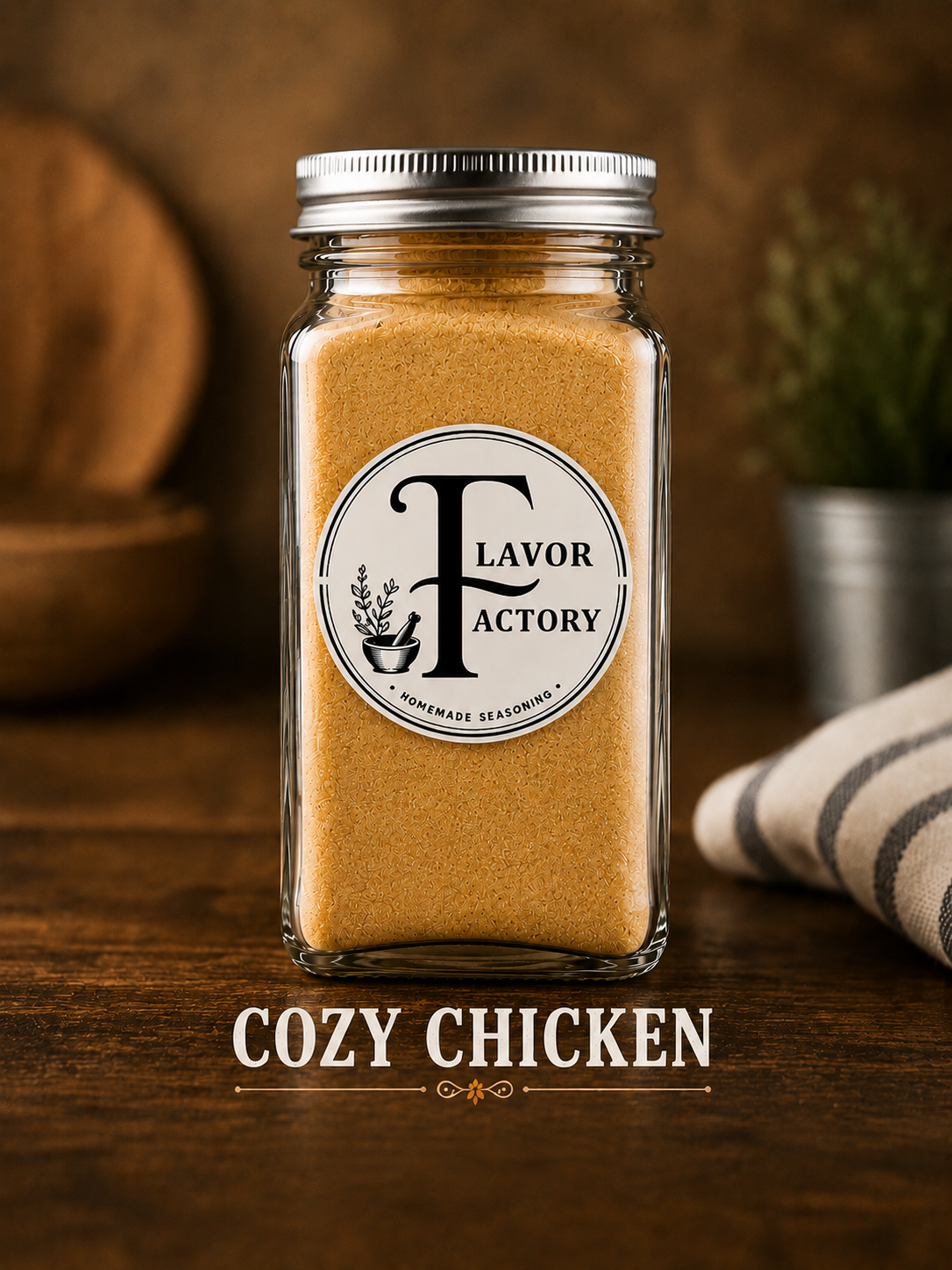
Building a balanced chicken rub from scratch takes a dozen spices and a steady hand. Our Cozy Chicken blend is the shortcut — small-batch, warm-savory, made to work on grilled, baked, or air-fried chicken without babysitting the ratios. One jar replaces the spice-rack chaos.
Flavor Factory Cozy Chicken
Warm, savory blend made for poultry.
Quick tips to remember
- • Salt first, season second. Always.
- • Pat chicken dry before any rub — moisture is the enemy of crust.
- • Season under the skin on roasts and whole birds.
- • Sugar-based rubs need lower heat. Smoked paprika handles high heat better.
- • Rest cooked chicken 5–10 minutes before slicing.